Uric acid diet: gosht, daal aur gout, what to eat and what to limit
A practical uric acid diet for Pakistanis: which foods raise uric acid (organ meat, red meat, some seafood, sugary drinks, alcohol), the truth about daal and vegetables, a sample desi menu, uric acid normal range and gout treatment basics.
Key points
- High uric acid can cause gout (sudden, very painful joint swelling, often in the big toe) and kidney stones. It's also linked with high blood pressure, diabetes and kidney disease.
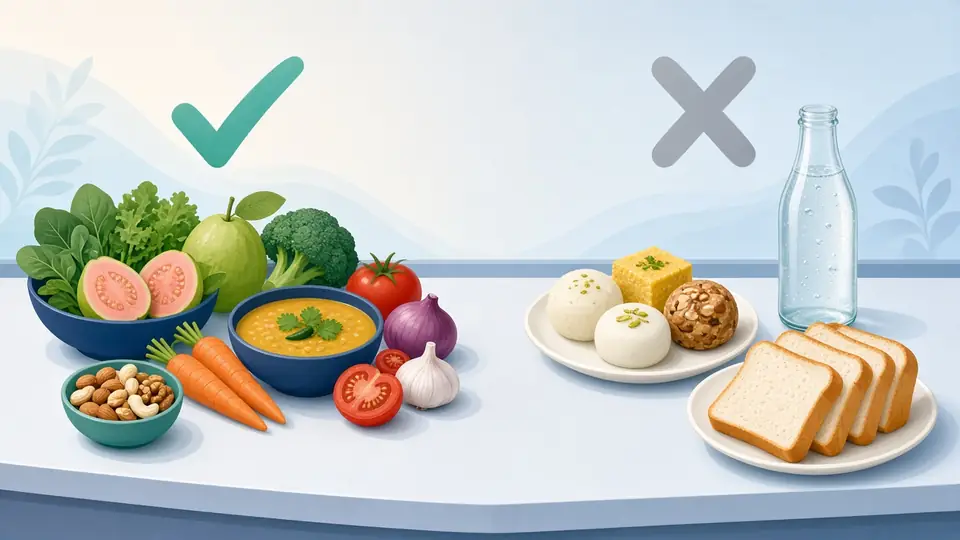
- The foods most strongly linked to higher uric acid and gout are organ meats (kaleji, gurda, maghaz), red meat, some seafood, sugary drinks and fruit juices with added fructose, and alcohol.
- Daal, beans and purine-rich vegetables (palak, mushrooms) don't seem to raise gout risk the way meat does in large studies, so you don't need to cut them out.
- Diet helps, but many people with gout also need long-term uric acid-lowering medicine prescribed and monitored by a doctor.
"Doctor ne kaha uric acid barh gaya hai, gosht band karo." Many Pakistani men hear this after a blood test or a painful night with a swollen toe. Then the confusion starts: is daal allowed? What about chicken, palak, tomatoes, chana? Do you have to live on boiled vegetables?
This guide explains what uric acid is, which foods matter most, what research says about daal and vegetables, and how diet fits with medical treatment.
What is uric acid?
Uric acid is a waste product made when your body breaks down purines, natural substances found in your own cells and in many foods. Normally, the kidneys remove uric acid in urine.
When uric acid builds up in the blood (hyperuricaemia), it can form sharp crystals in joints and kidneys. This causes:
- Gout: sudden attacks of severe pain, swelling, heat and redness, often in the big toe, ankle, knee or wrist, typically starting at night
- Kidney stones
- Tophi: chalky lumps under the skin in long-standing gout
Many people have high uric acid without symptoms. Not everyone with high uric acid gets gout.
Uric acid normal range
Laboratories use slightly different reference ranges. As a general guide, many labs list roughly:
| Group | Typical reference range |
|---|---|
| Men | about 3.4–7.0 mg/dL |
| Women | about 2.4–6.0 mg/dL |
Always check the range printed on your own report. For people with gout, guidelines usually aim to keep uric acid below 6 mg/dL on treatment, and sometimes lower.
What raises uric acid?
- Diet: organ meat, red meat, some seafood, sugary drinks, alcohol
- Being overweight
- Genetics and family history
- Kidney disease
- Some medicines, such as certain diuretics (water pills) and low-dose aspirin
- Dehydration, crash diets and fasting
- Conditions such as high blood pressure, diabetes and psoriasis
Uric acid diet: foods to limit
1. Organ meats
Kaleji (liver), gurda (kidney), maghaz (brain), paye and other offal are very high in purines. These are best avoided if you have gout.
2. Red meat
Beef and mutton are linked to higher gout risk. You don't necessarily need to cut them out completely, but keep portions small and not daily. Avoid very large servings at dawats and Eid.
3. Some seafood
Certain fish and shellfish, such as sardines, anchovies, prawns and mussels, are high in purines. Other fish can be eaten in moderate portions, as fish has heart-health benefits. Ask your doctor.
4. Sugary drinks and added fructose
Cold drinks, packaged juices and drinks sweetened with fructose raise uric acid. Large studies link sugar-sweetened drinks with higher gout risk. This is one of the easiest changes to make.
5. Alcohol
Alcohol, especially beer and spirits, raises uric acid and can trigger gout attacks.
6. Rich, heavy meals
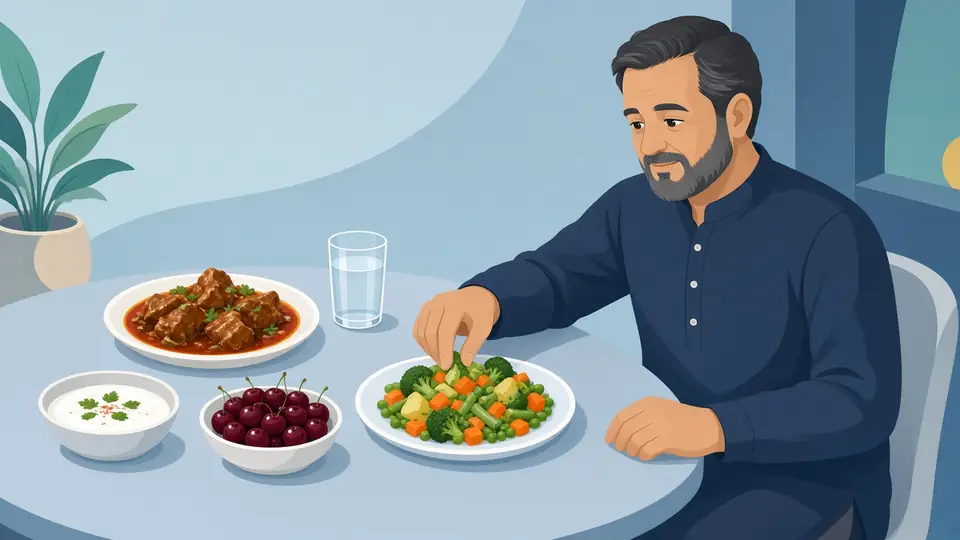
Large meat-heavy meals, such as nihari, paye, biryani with lots of meat, and repeated dawat dinners, are common gout triggers.
What about daal, chana and vegetables?
This is the biggest myth in Pakistan. Many patients are told to stop eating daal, chana, rajma, palak, tomatoes and cauliflower.
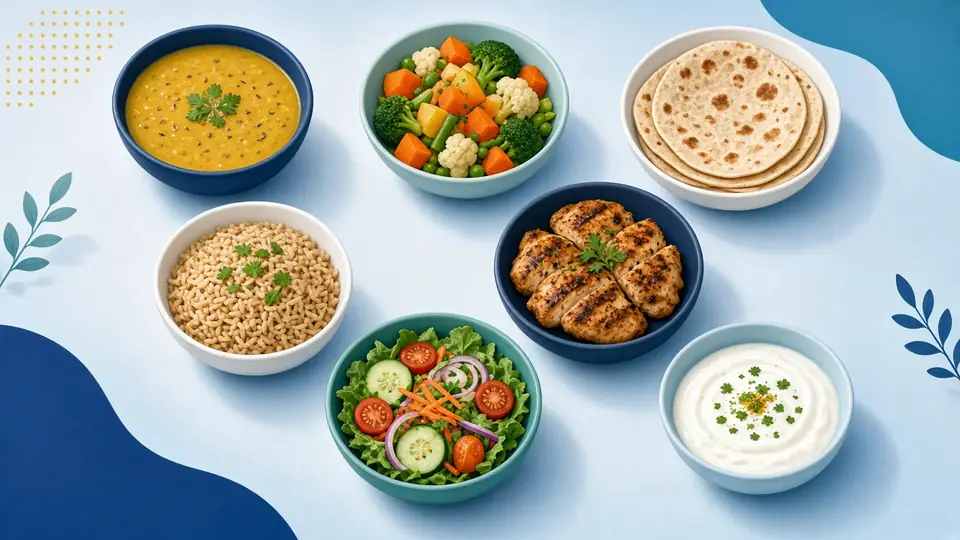
Large population studies have found that purine-rich vegetables and legumes don't increase gout risk in the way meat and seafood do. Plant proteins such as daal and chana are a healthy part of the diet for most people with high uric acid, and they help replace meat.
If a specific food seems to trigger your attacks, discuss it with your doctor, but there's no need to cut out all daal and vegetables.
Foods that may help
- Low-fat dairy: milk, yogurt and lassi without sugar. Dairy is linked with lower gout risk in research.
- Plenty of water: helps your kidneys remove uric acid. Unless your doctor has told you to limit fluids, aim to keep urine pale.
- Vegetables, fruits, whole grains
- Coffee: some studies associate coffee with lower uric acid, but don't start drinking it just for this, especially if you have high blood pressure or sleep problems.
- Cherries: some observational research suggests a link with fewer gout attacks; the evidence is limited.
A sample desi uric acid-friendly menu
| Meal | Ideas |
|---|---|
| Breakfast | Dalia (oats) with milk, or 1–2 roti with an egg and a cup of yogurt |
| Mid-morning | A fruit (apple, guava, orange) |
| Lunch | Daal or chana with roti or rice, salad and raita |
| Evening | Lassi without sugar, or a handful of roasted chana |
| Dinner | Chicken or fish curry (small portion) with vegetables and roti |
| Drinks | Water through the day; avoid cold drinks and packaged juice |
Keep red meat to a small portion a few times a week at most, and avoid organ meats.
Weight loss: slow and steady
Losing weight can lower uric acid. But crash diets and long fasts can temporarily raise uric acid and trigger attacks. Aim for gradual weight loss (around 0.5–1 kg a week) with regular meals and activity.
If you fast in Ramzan and have gout, drink plenty of water between iftar and sehri, and talk to your doctor about your medicines.
Diet is only part of treatment
Diet alone typically lowers uric acid only modestly. Many people with recurrent gout need medicine.
- During an attack: a doctor may prescribe anti-inflammatory medicines or other treatments to reduce pain and swelling. Rest the joint, raise it, and use an ice pack wrapped in a cloth.
- Long-term: uric acid-lowering medicines are recommended for people with frequent attacks, tophi or kidney stones. They're usually taken every day, long-term, with regular blood tests.
- Don't stop medicine when you feel better. Gout often returns.
Never take leftover medicines or someone else's tablets. Some painkillers aren't safe if you have kidney disease, stomach ulcers or heart problems.
Uric acid, diabetes and BP
High uric acid often goes along with high blood pressure, type 2 diabetes, obesity and kidney disease. If your uric acid is high, ask your doctor to check your blood pressure, blood sugar and kidney function too.
See a doctor promptly if
- You have a sudden, hot, red, very painful, swollen joint, especially with fever. A joint infection must be ruled out urgently.
- You've had two or more gout attacks, gout lumps (tophi) or kidney stones.
- You have kidney disease, diabetes or heart disease and a high uric acid result.
- You're taking medicines (for example some water pills) and your uric acid is high. Don't stop any medicine without advice.
Frequently asked questions
Uric acid mein kya nahi khana chahiye?
Kaleji, gurda, maghaz jaise organ meats, zyada red meat (beef, mutton), kuch seafood, cold drinks, packaged juices aur alcohol se parhez karein.
Is daal bad for uric acid?
For most people, no. Large studies show that legumes such as daal and chana don't raise gout risk in the way meat does. They're a healthy protein choice.
Is chicken allowed in a uric acid diet?
Chicken can usually be eaten in moderate portions. It's lower in purines than organ meats, and many guidelines treat it as a better choice than red meat.
Can drinking water lower uric acid?
Staying well hydrated helps your kidneys remove uric acid and may reduce the risk of attacks and kidney stones.
Can gout be cured with diet alone?
Diet helps but usually isn't enough for people with frequent attacks. Long-term uric acid-lowering medicine, prescribed and monitored by a doctor, is often needed.
Sources
- NHS. Gout.
- MedlinePlus. Uric acid blood test.
- Choi HK, et al. Purine-rich foods, dairy and protein intake, and the risk of gout in men. New England Journal of Medicine, 2004.
- Choi HK, Curhan G. Soft drinks, fructose consumption, and the risk of gout in men: prospective cohort study. BMJ, 2008.
- FitzGerald JD, et al. 2020 American College of Rheumatology guideline for the management of gout. Arthritis Care and Research, 2020.
- NICE. Gout: diagnosis and management (NG219).
Sources were checked on 26 November 2026. Found an error? Tell us and we will correct it.
Medical disclaimer: This article is general information, not a diagnosis or treatment plan. Please talk to a qualified doctor about your own situation. Read our full disclaimer.
Sugar aur BP par weekly tips
One short email a week: desi diet, readings and small habits that help. Free, no spam.
We only use your email to send this newsletter and never share it. Unsubscribe anytime, every email has a one-click link. Privacy policy
Shukriya! You're subscribed. Pehli email jald aayegi.
Something went wrong. Please check your email address and try again.