BP normal range by age: what your blood pressure numbers mean
What is normal blood pressure? A clear BP chart for adults (normal, elevated, high, crisis), whether normal BP changes with age, low BP, and how to measure BP correctly at home.
Key points
- For adults, below 120/80 mmHg is considered normal (ideal), whatever your age.
- 130/80 or higher is classed as high blood pressure by US guidelines; 140/90 or higher is the threshold used by the WHO and many other guidelines.
- 180/120 or higher is a hypertensive crisis. With symptoms such as chest pain, breathlessness or weakness, it's an emergency.
- BP tends to rise with age, but "high for your age" is not the same as healthy. Older adults' treatment targets may be adjusted by their doctor.
"BP kitna hona chahiye?" sounds like a simple question, but the answer depends on which guideline you read, and many people believe that normal blood pressure goes up with age, so "120 plus your age" is fine. It isn't.
This guide explains what the two numbers mean, the categories used by major guidelines, how age fits in, and how to measure your BP properly at home.
What do the two numbers mean?
A blood pressure reading such as 130/85 mmHg has two parts:
- Systolic (top number): the pressure in your arteries when your heart beats.
- Diastolic (bottom number): the pressure between beats, when your heart relaxes.
Both matter. In people over 50, the top number is usually the stronger predictor of heart disease and stroke.
Blood pressure chart for adults
The American Heart Association (AHA) and American College of Cardiology (ACC) use these categories for adults:
| Category | Top (systolic) | Bottom (diastolic) | |
|---|---|---|---|
| Normal | Below 120 | and | Below 80 |
| Elevated | 120–129 | and | Below 80 |
| High BP, stage 1 | 130–139 | or | 80–89 |
| High BP, stage 2 | 140 or higher | or | 90 or higher |
| Hypertensive crisis | Higher than 180 | and/or | Higher than 120 |
The WHO and many other guidelines, including those widely used in Pakistan and the UK, diagnose hypertension at 140/90 mmHg or higher in the clinic. Both approaches agree on what's healthy: below 120/80 is ideal, and the higher your BP goes above that, the greater your risk of heart attack, stroke and kidney disease.
If your top and bottom numbers fall into different categories, the higher category applies. For example, 125/88 counts as stage 1 high BP under the AHA system.
Does normal BP change with age?
Not really. The definition of normal (below 120/80) is the same for all adults. What changes with age is:
- How common high BP is. Arteries stiffen with age, so the top number tends to rise. Many people over 60 have high BP.
- Treatment targets. For most adults, guidelines aim for below 130/80 if it can be reached safely. In older or frail people, doctors sometimes accept a slightly higher target to avoid dizziness and falls.
So when you see "BP chart by age" tables online showing averages, remember: an average BP for 60-year-olds is not a healthy BP. It mostly shows how common hypertension becomes.
Children and teenagers
Children's BP is judged differently, using charts based on age, sex and height. If your child's BP is measured as high, ask a paediatrician to interpret it.
Pregnancy
High BP in pregnancy needs prompt attention, as it can be a sign of pre-eclampsia. BP of 140/90 or higher in pregnancy should always be reported to your doctor or midwife straight away.
What is low blood pressure?
Blood pressure below about 90/60 mmHg is generally considered low. Many healthy, active people have low readings and feel perfectly well, which isn't a problem.
Low BP matters when it causes symptoms such as dizziness, light-headedness, fainting, blurred vision or confusion, or if it's caused by dehydration, bleeding, infection or medicines. In Pakistan's summer heat, dehydration from diarrhoea or sweating is a common cause. Drink fluids and see a doctor if symptoms continue.
Why high BP is called the "silent killer"
Most people with high blood pressure feel completely normal. Headaches, nosebleeds or a "heavy head" are not reliable signs. The WHO estimates that well over a billion adults worldwide have hypertension, and that a large share of them don't know they have it.
Over years, untreated high BP damages the arteries and can cause:
- Heart attack and heart failure
- Stroke
- Kidney disease
- Eye damage
- Dementia
- Erection problems in men
The only way to know your BP is to measure it.
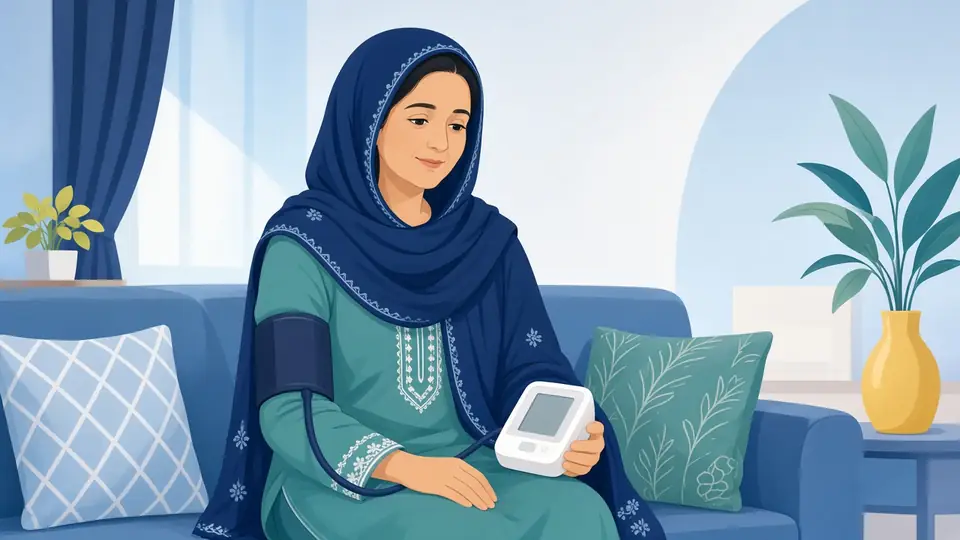
How to measure BP correctly at home
A validated automatic upper-arm monitor is the best option for home use. Wrist monitors are less reliable. To get an accurate reading:
- Avoid caffeine, smoking and exercise for 30 minutes before.
- Empty your bladder.
- Sit quietly for 5 minutes in a chair with your back supported and feet flat on the floor. Don't cross your legs.
- Rest your arm on a table at heart level, with the cuff on bare skin, not over a sleeve.
- Use the right cuff size. A cuff that's too small gives a falsely high reading.
- Don't talk during the measurement.
- Take two readings a minute apart and write both down.
- Measure in the morning and evening for about a week before a doctor's visit.
Home readings are usually a little lower than clinic readings. A home average of 135/85 or higher is generally considered high.
"White coat" and "masked" hypertension
Some people's BP rises only in the clinic because they're anxious (white coat hypertension). Others are normal in the clinic but high at home (masked hypertension). Home or 24-hour monitoring helps sort this out.
What to do about your number
| Your BP | What to do |
|---|---|
| Below 120/80 | Great. Keep up healthy habits and check at least once a year. |
| 120–129 / below 80 | Lifestyle changes: less salt, more activity, weight loss if needed. Recheck in 3–6 months. |
| 130–139 / 80–89 | See a doctor. Lifestyle changes are essential; some people also need medicine, especially with diabetes or heart risk. |
| 140/90 or higher | See a doctor soon. Medicine is often needed along with lifestyle changes. |
| 180/120 or higher | Rest and recheck after 5 minutes. If it's still this high, or you have symptoms, get emergency care. |
Learn the practical steps in our guides on high BP ka ilaj aur namak and BP kam karne ke 10 tareeqay.
Diabetes and blood pressure
If you have diabetes, keeping your BP controlled is just as important as controlling sugar. The combination sharply raises the risk of heart attack, stroke and kidney damage. Most guidelines suggest that adults with diabetes aim for below 130/80 if it can be reached safely. See our sugar level chart for sugar targets.
See a doctor promptly if
- Your BP is 180/120 or higher, especially with chest pain, shortness of breath, severe headache, confusion, blurred vision, or weakness or numbness on one side. Call 1122.
- Your home readings are repeatedly 140/90 or higher.
- You feel dizzy or faint, especially when standing up, after starting BP medicine.
Frequently asked questions
Is 130/90 BP normal?
No. A bottom number of 90 counts as stage 2 high blood pressure under US guidelines and is at the hypertension threshold under WHO guidelines. Recheck it properly and see a doctor if it stays at this level.
Is 140/90 high BP?
Yes. 140/90 mmHg or higher is classed as high blood pressure by all major guidelines.
What is normal BP for a 60-year-old?
The same as for any adult: below 120/80 is ideal. Many 60-year-olds have higher readings because BP rises with age, but that doesn't make it healthy. A doctor may set a personalised treatment target.
Can stress cause high BP?
Stress can raise blood pressure temporarily. Long-term stress may contribute to high BP through poor sleep, unhealthy eating, smoking and inactivity. Managing stress helps, but it doesn't replace treatment.
Which hand should I measure BP on?
The first time, measure both arms. If one arm is consistently higher, use that arm in future. A large difference between arms should be mentioned to a doctor.
Sources
- American Heart Association. Understanding blood pressure readings.
- World Health Organization. Hypertension fact sheet.
- NHS. High blood pressure (hypertension).
- NHS. Low blood pressure (hypotension).
- NICE. Hypertension in adults: diagnosis and management (NG136).
- American Heart Association. Monitoring your blood pressure at home.
Sources were checked on 26 November 2026. Found an error? Tell us and we will correct it.
Medical disclaimer: This article is general information, not a diagnosis or treatment plan. Please talk to a qualified doctor about your own situation. Read our full disclaimer.
Sugar aur BP par weekly tips
One short email a week: desi diet, readings and small habits that help. Free, no spam.
We only use your email to send this newsletter and never share it. Unsubscribe anytime, every email has a one-click link. Privacy policy
Shukriya! You're subscribed. Pehli email jald aayegi.
Something went wrong. Please check your email address and try again.