Sugar level chart: normal fasting, after-meal and HbA1c levels (mg/dL)
What is a normal sugar level? Fasting, random, after-meal and HbA1c ranges in mg/dL, what counts as prediabetes or diabetes, and common targets if you have diabetes.
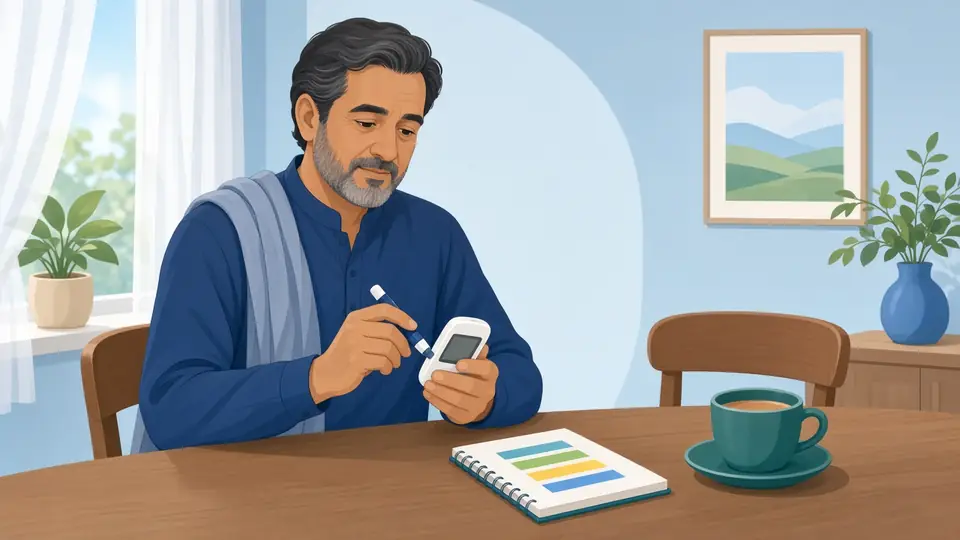
Key points
- Normal fasting sugar is below 100 mg/dL. 100–125 mg/dL is prediabetes, and 126 mg/dL or higher on two tests suggests diabetes.
- Normal HbA1c is below 5.7%. 5.7–6.4% is prediabetes, and 6.5% or higher is in the diabetes range.
- A random sugar of 200 mg/dL or more with classic symptoms (thirst, frequent urination, weight loss) points to diabetes.
- If you already have diabetes, many adults aim for 80–130 mg/dL before meals and below 180 mg/dL 1–2 hours after meals, but your doctor may set different targets.
"Sugar kitni honi chahiye?" is one of the most common health questions in Pakistan, and for good reason. The second National Diabetes Survey of Pakistan (2016–17) found that about 26% of adults had diabetes, and many more had prediabetes. A lot of people only discover it by chance, during a test for something else.
This guide puts the numbers in one place, in mg/dL, the unit used by most labs and glucometers in Pakistan. It explains what each test means, what counts as normal, and the targets often used for people who already have diabetes.
Sugar level chart at a glance
These are the diagnostic ranges used by the American Diabetes Association (ADA) and the World Health Organization (WHO), which most Pakistani labs and doctors follow.
| Test | Normal | Prediabetes | Diabetes |
|---|---|---|---|
| Fasting blood sugar (after 8+ hours without food) | Below 100 mg/dL | 100–125 mg/dL | 126 mg/dL or higher |
| 2 hours after a 75 g glucose drink (OGTT) | Below 140 mg/dL | 140–199 mg/dL | 200 mg/dL or higher |
| HbA1c (3-month average) | Below 5.7% | 5.7–6.4% | 6.5% or higher |
| Random blood sugar (any time of day) | – | – | 200 mg/dL or higher with symptoms |
A few important points:
- One high reading is not a diagnosis. Unless you have obvious symptoms, doctors confirm diabetes with a second test, either the same test repeated or a different one.
- Prediabetes means your sugar is higher than normal but not yet in the diabetes range. It is a warning sign, and it is often reversible with weight loss and more activity.
- If you see mmol/L on a foreign report, divide mg/dL by 18 to convert (for example 126 mg/dL ≈ 7.0 mmol/L).
What each sugar test means
Fasting blood sugar (FBS)
This is measured after at least 8 hours without food or drinks other than water, usually first thing in the morning. It shows how well your body controls sugar overnight, when you haven't eaten. It is cheap, widely available and the most common first test in Pakistan.
Tea with sugar, a biscuit or even a few sips of juice before the test can push your result up, so go truly empty-stomach.
Random blood sugar (RBS)
This is a test taken at any time, regardless of when you last ate. In someone without diabetes it rarely goes above 140 mg/dL. On its own, a random sugar is mainly useful when it is very high (200 mg/dL or more) together with symptoms such as excessive thirst, frequent urination and unexplained weight loss.
After-meal (postprandial) sugar
This is usually checked 2 hours after starting a meal. For people without diabetes it is normally below 140 mg/dL. For people with diabetes, it shows how a particular meal, such as a plate of biryani or three rotis, affects their sugar.
Oral glucose tolerance test (OGTT)
You drink a measured 75 g glucose solution and your blood is tested after two hours. It is more sensitive than fasting sugar and is used when results are borderline and to check for diabetes in pregnancy.
HbA1c
HbA1c measures how much sugar is stuck to your red blood cells. Because red blood cells live about three months, it reflects your average sugar over the past 2–3 months. You don't need to fast for it.
HbA1c can be misleading in some conditions that affect red blood cells, including some types of anaemia and inherited haemoglobin conditions such as thalassaemia trait, which is not rare in Pakistan. If your HbA1c and your daily sugar readings don't seem to match, tell your doctor.
What is a normal sugar level for someone without diabetes?
In a healthy adult without diabetes:
- Fasting: roughly 70–99 mg/dL
- 2 hours after eating: usually below 140 mg/dL
- HbA1c: below 5.7%
Sugar naturally rises after meals and falls again within a couple of hours. Short rises after a heavy meal are normal. What matters is where your fasting and average levels sit.
Sugar level targets if you have diabetes
Once you have diabetes, the question changes from "Is this normal?" to "Is this on target?" The ADA's general targets for many non-pregnant adults are:
| Measure | Common target |
|---|---|
| Before meals (including fasting) | 80–130 mg/dL |
| 1–2 hours after starting a meal | Below 180 mg/dL |
| HbA1c | Below 7% for many adults |
These are starting points, not rules. Your doctor may set:
- Tighter targets if you are younger, recently diagnosed and at low risk of hypos.
- Looser targets (for example HbA1c below 8%) if you are older, have heart or kidney disease, live alone, or have had dangerous low sugars.
- Different targets in pregnancy, which are much stricter.
Use these numbers to understand your readings and to have a better conversation with your doctor, not to change your medicines on your own.
Low sugar (hypoglycaemia): the number that matters most
For people taking insulin or certain tablets (especially sulfonylureas such as glibenclamide or gliclazide), a low sugar can be more dangerous in the short term than a high one.
- Below 70 mg/dL is considered low.
- Below 54 mg/dL is significantly low and needs action immediately.
Symptoms include shaking, sweating, a pounding heart, sudden hunger, irritability, confusion and blurred vision.
What to do: if you can, check your sugar. If it is low, take about 15 g of fast-acting sugar, such as half a glass of fruit juice, three teaspoons of sugar dissolved in water, or glucose tablets. Recheck after 15 minutes and repeat if it is still below 70 mg/dL. Once it is back up, eat a snack or your next meal. If the person is drowsy or can't swallow safely, don't put anything in their mouth: call 1122.
How to check your sugar at home correctly
A home glucometer is one of the most useful tools for anyone with diabetes. To get reliable readings:
- Wash and dry your hands. Sugar on your fingers from fruit or mithai can give a falsely high result.
- Use the side of the fingertip, not the pad. It hurts less.
- Make sure the test strips are in date and stored away from heat and humidity. Strips left in a hot car or a kitchen can give wrong results.
- Write down your readings with the time and what you ate, or use the meter's memory. Take this log to your doctor.
- Check your meter against a lab test now and then. Home meters can differ from lab results by around 10–15%, which is normal.
How often you should test depends on your treatment. People on insulin usually test several times a day, while someone controlled with diet alone may test much less. Ask your doctor what suits you.
Why your sugar might be high in the morning
Many people are surprised when their fasting sugar is higher than their bedtime reading. Common reasons include:
- A heavy or late dinner, especially rice, naan or sweets
- The "dawn phenomenon": hormones released in the early morning raise sugar
- Missed or mistimed medicine doses
- Illness, infection, stress or poor sleep
If this happens often, record a few bedtime and morning readings and show them to your doctor. Don't increase your dose yourself, because doing that can cause low sugar at night.
Who should get their sugar tested?
The ADA recommends screening all adults from age 35, and earlier for anyone who is overweight and has another risk factor. Given how common diabetes is in Pakistan, it's sensible to get tested if you:
- Are overweight, especially with a large waist
- Have a parent, brother or sister with diabetes
- Have high blood pressure or high cholesterol
- Had diabetes in pregnancy, or have PCOS
- Do little physical activity
- Have symptoms such as frequent urination, constant thirst, slow-healing wounds or frequent infections
If your result is normal, repeat it at least every 3 years. If you have prediabetes, test every year.
You can read more about the warning signs in our guide to diabetes symptoms men often ignore, and see what to do next in sugar ka ilaj.
See a doctor promptly if
- Your sugar is above 300 mg/dL, or your glucometer shows "HI".
- Your sugar is below 70 mg/dL and doesn't come up after taking fast-acting sugar, or you feel confused, faint or drowsy.
- You have high sugar along with vomiting, deep fast breathing, a fruity smell on the breath or severe drowsiness. These can be signs of an emergency; go to a hospital straight away.
Frequently asked questions
What is a normal sugar level after eating?
In someone without diabetes, sugar measured 2 hours after starting a meal is usually below 140 mg/dL. For people with diabetes, a common target is below 180 mg/dL 1–2 hours after meals.
Is 140 sugar normal?
It depends on when it was measured. A reading of 140 mg/dL two hours after a meal is at the upper limit of normal. A fasting reading of 140 mg/dL is above the diabetes cut-off of 126 mg/dL and should be repeated and discussed with a doctor.
What is a dangerous sugar level?
Below 70 mg/dL is low and needs treatment, and below 54 mg/dL is seriously low. On the high side, readings persistently above 250–300 mg/dL, especially with vomiting, drowsiness or fast breathing, need urgent medical care.
Is HbA1c better than a fasting sugar test?
Neither is "better"; they show different things. Fasting sugar is a snapshot of one morning, while HbA1c shows your average over about three months. Doctors often use both.
Can I have diabetes if my fasting sugar is normal?
Yes. Some people, particularly in South Asia, have a normal fasting sugar but high sugar after meals. An HbA1c or glucose tolerance test can pick this up.
Sources
- American Diabetes Association. Standards of Care in Diabetes, updated annually (Section 2: Diagnosis and Classification of Diabetes).
- American Diabetes Association. Understanding A1C: Diagnosis.
- World Health Organization. Diabetes fact sheet.
- Basit A, et al. Prevalence of diabetes, pre-diabetes and associated risk factors: second National Diabetes Survey of Pakistan (NDSP), 2016–2017. BMJ Open, 2018.
- MedlinePlus (US National Library of Medicine). Blood glucose test.
- NHS. Low blood sugar (hypoglycaemia).
Sources were checked on 26 November 2026. Found an error? Tell us and we will correct it.
Medical disclaimer: This article is general information, not a diagnosis or treatment plan. Please talk to a qualified doctor about your own situation. Read our full disclaimer.
Sugar aur BP par weekly tips
One short email a week: desi diet, readings and small habits that help. Free, no spam.
We only use your email to send this newsletter and never share it. Unsubscribe anytime, every email has a one-click link. Privacy policy
Shukriya! You're subscribed. Pehli email jald aayegi.
Something went wrong. Please check your email address and try again.