Sugar mein kya khayen, kya na khayen: a simple food list for diabetes
A clear list of foods to eat, limit and avoid with diabetes (sugar), using everyday Pakistani food: vegetables, daal, fruits, roti, rice, chai, mithai and snacks.
Key points
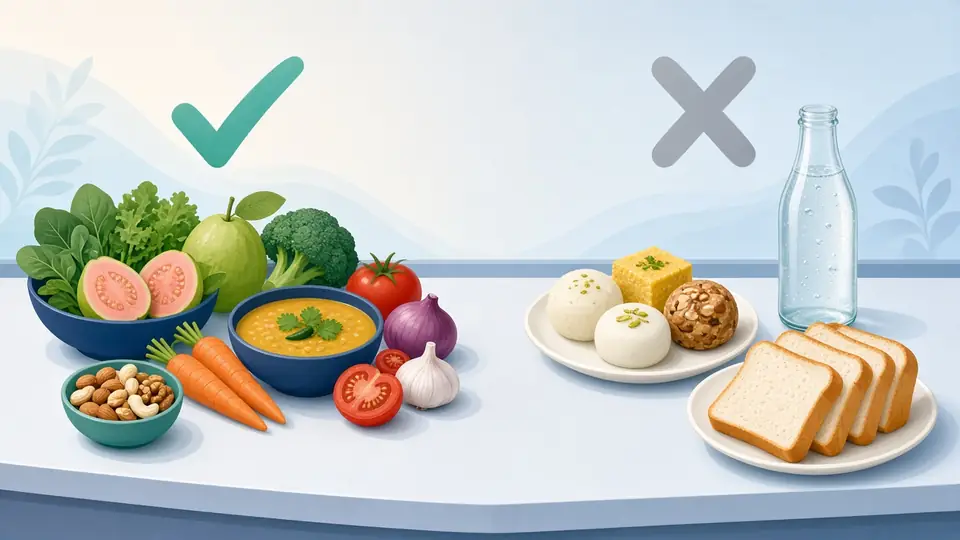
- Eat freely: non-starchy sabzi and salad, water, unsweetened chai and lassi.
- Eat regularly, in portions: daal, chana, eggs, chicken, fish, dahi, whole fruits, whole-wheat roti.
- Limit: rice, potatoes, naan, paratha, sweet fruits like mango and grapes, fried food.
- Avoid: cold drinks, juices, mithai, sugar in chai, bakery items, and "sugar-free" mithai eaten in large amounts.
After a diabetes diagnosis, everyone in the family suddenly has advice: "Chawal bilkul band", "aam haram hai", "karela roz piyo". Some of it is helpful, much of it is not, and a lot of it is contradictory.
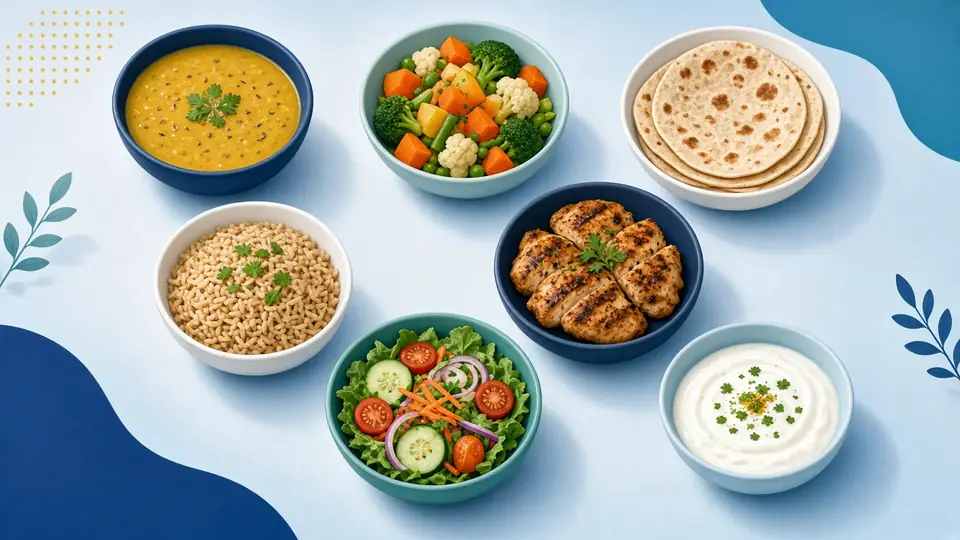
This page cuts through the noise with a simple traffic-light list of everyday Pakistani foods: what you can eat freely, what to eat in measured portions and what to avoid. For a full meal plan, see our diabetes diet plan with desi food.
Green: eat freely
These foods have very little effect on blood sugar and are filling and nutritious.
Non-starchy vegetables
- Lauki, tori, tinda, karela, bhindi
- Palak, saag, methi, salad leaves
- Gobhi, band gobhi, shimla mirch, baingan
- Cucumber, tomato, onion, mooli, carrots (raw in salad)
- Mushrooms, green beans
Aim to fill half your plate with these at lunch and dinner. Cook them with less oil.
Drinks
- Water (the best choice)
- Chai or coffee without sugar
- Green tea, qehwa without sugar
- Plain lassi or chaach without sugar
- Nimbu pani without sugar
Yellow: eat regularly, but watch the portion
These are healthy foods, but some contain carbohydrates or calories, so portions matter.
Protein foods
- Daal (masoor, moong, mash, chana daal): high in fibre and protein. They contain some carbohydrate, but they raise sugar slowly.
- Chana, lobia, rajma
- Eggs: boiled, poached or omelette with little oil
- Chicken and fish: grilled, baked, tandoori or in a light salan
- Dahi and paneer
- Lean meat in moderate amounts, a few times a week
Protein at each meal helps you feel full and slows the rise in sugar.
Whole grains
- Chakki atta roti: usually 1 medium chapati per meal
- Oats (daliya): plain, without sugar
- Whole-wheat bread: 2 slices instead of a roti
- Barley (jau): you can add it to atta
Fruit
Whole fruit in one portion at a time (about a fist-sized fruit or a small bowl), ideally with or after a meal rather than on an empty stomach:
- Guava (amrood), apple, pear, orange, kinnow, malta
- Jamun, strawberries, papaya, peach, plum
- Watermelon in a small bowl
Nuts and seeds
- Almonds, walnuts, unsalted peanuts, pistachios: a small handful a day
- Flaxseed (alsi), chia seeds
Nuts are healthy but high in calories, so keep the handful small.
Milk
- 1–2 glasses of milk a day is fine for most people. Choose low-fat if you're trying to lose weight.
Orange: limit
These raise sugar quickly or are very high in calories. You don't have to ban them forever, but keep them small and occasional.
- White rice: a small cup, not a plate, and not with roti
- Naan, paratha, puri, kulcha: on special occasions
- Potatoes: aloo in salan occasionally; avoid fries and aloo paratha
- Sweet fruits: mango, chikoo, grapes, banana, lychee, dates. Have a small portion only.
- Fried foods: samosa, pakora, fries, fried chicken
- Biryani and pulao: a small portion with a big salad and raita
- Red meat and nihari, paye, haleem: rich and oily; occasional and in small portions
- Dried fruit: raisins, dried apricots and figs are concentrated sugar
- Breakfast cereals, which often contain added sugar
Red: avoid
These cause large, fast spikes in sugar and offer little nutrition.
- Cold drinks and energy drinks
- Packaged juices and fresh juices, even "100% juice"
- Sugar in chai (switch gradually to none)
- Sherbets, Rooh Afza drinks, sweet lassi, milkshakes, falooda
- Mithai: gulab jamun, jalebi, barfi, halwa, kheer and sewaiyan made with sugar
- Bakery items: cakes, pastries, cream rolls, rusks, sweet biscuits
- Honey, gur and shakkar used as "healthy" sugar. They raise sugar just like white sugar.
- Sweets labelled "sugar-free" eaten in large amounts. Many still contain maida, ghee and carbohydrates.
Popular desi "sugar foods": what's the truth?
Karela (bitter gourd)
Karela is a healthy vegetable and fine to eat. Some small studies suggest it may lower sugar slightly, but the evidence is weak and inconsistent. It does not replace medicine, and drinking large amounts of karela juice can cause stomach upset and, with diabetes medicines, possibly low sugar.
Methi (fenugreek) seeds
Methi is high in fibre, and some studies show modest benefits for sugar. It's a reasonable addition to food, but not a treatment.
Cinnamon (darchini)
Research results are mixed, and any effect appears small. Use it as a spice, not as medicine.
Jamun seeds and "desi sugar powders"
Evidence is limited. Be very careful with herbal powders and capsules sold as "sugar ka ilaj": some products sold as natural diabetes remedies have been found to contain hidden prescription drugs, which can cause dangerous low sugar.
Smart swaps
| Instead of | Try |
|---|---|
| Chai with 2 spoons of sugar | Chai with no sugar, or reduce half a spoon each week |
| Cold drink | Water, soda water with lemon |
| Paratha | Chapati with a little oil, or besan chilla |
| Biscuits with chai | 5–6 almonds or roasted chana |
| Big plate of rice | Small cup of rice + extra daal + salad |
| Fruit juice | One whole fruit |
| Fried chicken | Chicken tikka or grilled chicken |
| Gulab jamun | A few slices of guava or a small bowl of strawberries |
Timing matters too
- Don't skip meals, especially if you take insulin or tablets that can cause low sugar.
- Eat at regular times each day.
- Walk for 10–15 minutes after meals. This lowers the after-meal spike.
- Have dinner 2–3 hours before bed, not just before sleeping.
Eating out and at dawats
Weddings, Eid dinners and family dawats are part of life. Some practical tips:
- Don't arrive starving. A small, protein-rich snack, such as a boiled egg, a handful of chana or plain yogurt, beforehand can stop overeating.
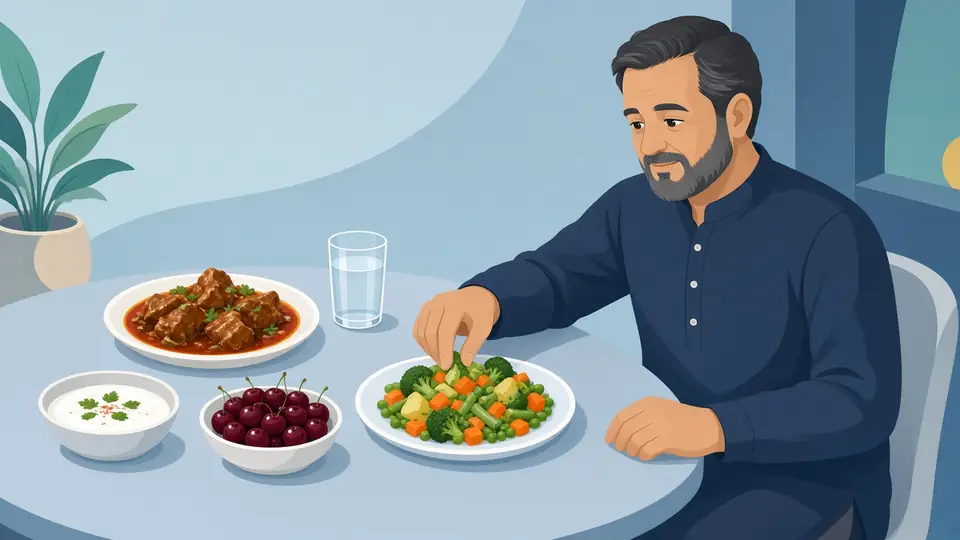
- Fill half your plate with salad and vegetables first, then add protein (chicken, mutton, fish, daal), then a small portion of rice or one naan.
- Pick one treat. If you want mithai or kheer, have a small portion and skip the extra naan or second plate of biryani.
- Watch the drinks. Cold drinks and sweet sharbat raise sugar quickly. Choose water or unsweetened drinks.
- Walk afterwards. A 10–15 minute walk after a heavy meal can help reduce the rise in blood sugar.
- Keep your medicines on time. If you're on insulin or medicines that can cause low sugar, ask your doctor how to adjust for late meals and fasting.
Ramadan
If you have diabetes and plan to fast, speak to your doctor before Ramadan. Fasting can be risky for some people with diabetes, especially those on insulin or certain tablets. Your doctor can advise whether fasting is safe for you, how to change medicine timing, and when you must break the fast, for example if sugar drops too low. Our Ramzan guide for sugar patients has the risk score, the "break the fast" numbers and a desi sehri-iftar plate.
See a doctor promptly if
- You get frequent low sugars (below 70 mg/dL) after changing your diet.
- You have kidney disease, as some "healthy" foods such as daal, nuts and certain fruits may need limiting.
- You're planning to fast in Ramadan.
Frequently asked questions
Can I eat mango if I have diabetes?
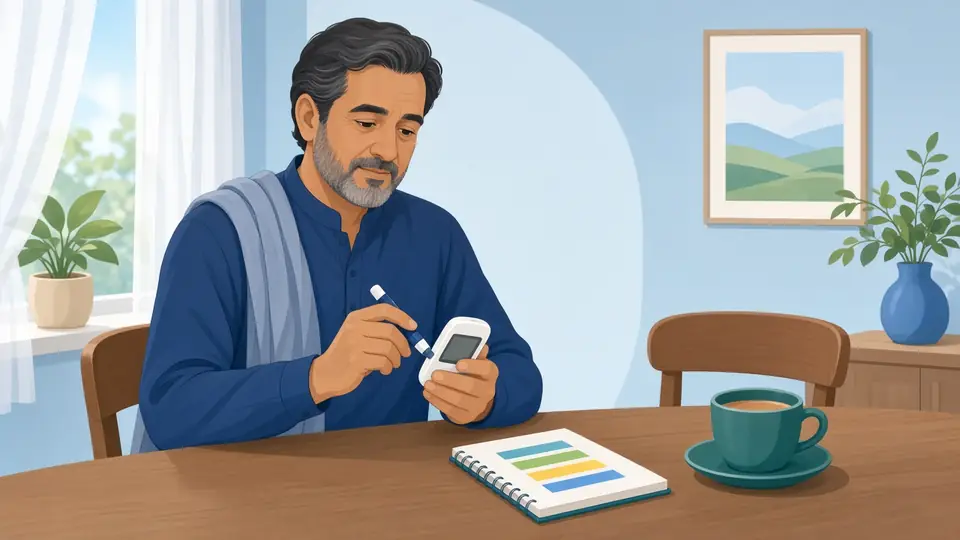
Yes, in a small portion (a few slices) as part of a meal, not several mangoes at once. Check your sugar 2 hours later to see how it affects you.
Which roti is best for diabetes?
Whole-wheat chakki atta roti is better than maida. Mixed-flour roti with barley or chana flour adds fibre. Portion matters most: usually one medium chapati per meal.
Is jaggery (gur) good for diabetes?
No. Gur, shakkar and honey raise blood sugar much like white sugar. Treat them all the same.
Can a diabetic drink milk?
Yes. One to two glasses a day is fine for most people. Avoid adding sugar, and choose low-fat milk if you're trying to lose weight.
Is "sugar-free" mithai safe?
Not necessarily. Many sugar-free sweets still contain flour, khoya and ghee, which raise sugar and add calories. Check the label and keep portions small.
Sources
- American Diabetes Association. What is the Diabetes Plate?.
- NHS. Treatment for type 2 diabetes.
- Diabetes UK. Eating well with diabetes.
- National Center for Complementary and Integrative Health (NIH). Diabetes and dietary supplements.
- World Health Organization. Healthy diet fact sheet.
- US Food and Drug Administration. Avoiding products contaminated with hidden ingredients.
Sources were checked on 26 November 2026. Found an error? Tell us and we will correct it.
Medical disclaimer: This article is general information, not a diagnosis or treatment plan. Please talk to a qualified doctor about your own situation. Read our full disclaimer.
Sugar aur BP par weekly tips
One short email a week: desi diet, readings and small habits that help. Free, no spam.
We only use your email to send this newsletter and never share it. Unsubscribe anytime, every email has a one-click link. Privacy policy
Shukriya! You're subscribed. Pehli email jald aayegi.
Something went wrong. Please check your email address and try again.