Heart attack symptoms in men: warning signs, what to do, and why minutes matter
Heart attack symptoms in men, including the less obvious signs common in people with diabetes, what to do while waiting for 1122, why you shouldn't drive yourself, the difference from gas or acidity, and how to lower your risk.
Key points
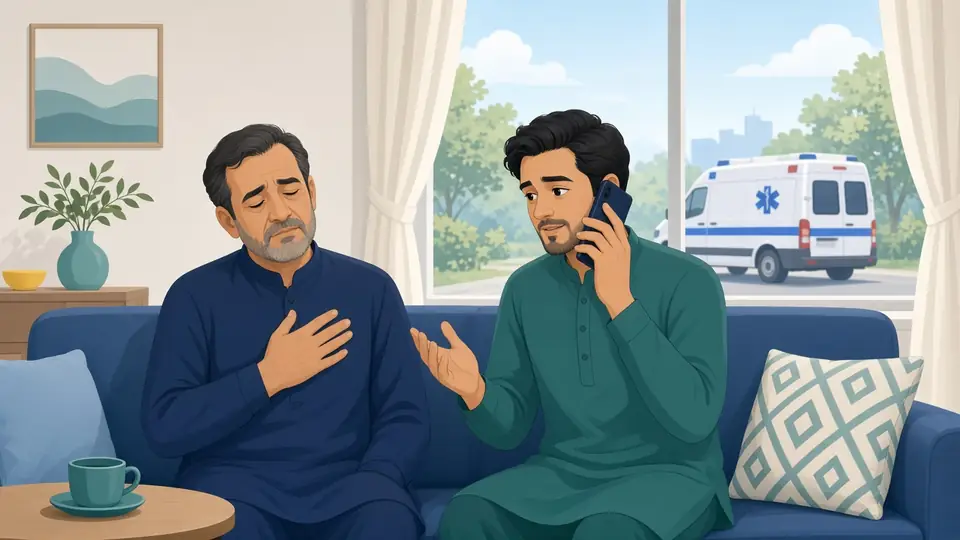
- The most common heart attack symptom is chest pain, pressure, tightness or heaviness, often spreading to the arm, jaw, neck, back or stomach, lasting more than a few minutes.
- Other signs: breathlessness, cold sweat, nausea, light-headedness or sudden extreme tiredness. People with diabetes may have milder or unusual symptoms.
- If you suspect a heart attack, call 1122 immediately. Don't wait to see if it passes, and don't drive yourself.
- Minutes matter. Faster treatment to reopen the blocked artery saves heart muscle and lives.
Every year, many Pakistani men die of heart attacks that could have been survived with faster help. Too often, chest pain is blamed on "gas", acidity or tiredness, and precious hours are lost.
South Asians tend to develop heart disease earlier than many other populations, and diabetes, high blood pressure and smoking are common. Knowing the warning signs, and acting fast, can save your life or someone else's.
What is a heart attack?
A heart attack (myocardial infarction) happens when the blood supply to part of the heart muscle is suddenly blocked, usually by a blood clot forming on a fatty plaque in a coronary artery. Without oxygen, the heart muscle starts to die. The longer the blockage lasts, the more damage occurs.
A heart attack is different from cardiac arrest, when the heart suddenly stops pumping effectively. A heart attack can lead to cardiac arrest.
Common heart attack symptoms in men
- Chest pain or discomfort: pressure, squeezing, tightness, heaviness or burning in the centre or left side of the chest. It usually lasts more than a few minutes, or goes away and comes back.
- Pain spreading to one or both arms (often the left), the jaw, neck, back or upper stomach
- Shortness of breath, with or without chest pain
- Cold sweat
- Nausea or vomiting
- Light-headedness or dizziness
- A sense of doom, or feeling extremely anxious
Symptoms can be sudden and severe, or start slowly with mild discomfort.
Less obvious symptoms (especially with diabetes)
Some people, particularly those with diabetes, older adults and women, have milder or unusual symptoms:
- Mild chest discomfort or no chest pain at all
- Unexplained breathlessness
- Sudden, unusual tiredness or weakness
- Indigestion-like discomfort or upper stomach pain
- Feeling generally unwell, sweaty or faint
Diabetes can damage nerves, which may dull pain signals. If you have diabetes and feel suddenly unwell like this, don't dismiss it. See diabetes symptoms men ignore.
What to do: step by step
- Call 1122 immediately, or get to the nearest hospital emergency department. Say you think it's a heart attack.
- Stop all activity. Sit down and rest in a comfortable position, often half-sitting.
- Don't drive yourself. If an ambulance isn't quickly available, have someone drive you to the nearest hospital with an emergency department, ideally one with a cardiology unit.
- Aspirin: emergency services in many countries advise chewing a regular 300 mg aspirin tablet if you're not allergic to it and haven't been told not to take it. Ask the 1122 operator or a doctor if you're unsure.
- Loosen tight clothing, stay calm, and keep someone with you.
- If the person collapses and isn't breathing normally, start CPR: push hard and fast in the centre of the chest, about 100–120 times a minute, and continue until help arrives. Use an AED (defibrillator) if one is available.
Why minutes matter
Hospitals can reopen a blocked artery, often with an emergency procedure to place a stent (primary angioplasty) or with clot-busting medicine. These treatments work best the earlier they're given. Every delay means more heart muscle is lost.
Common reasons for delay in Pakistan:
- Thinking it's gas or acidity and taking antacids
- Waiting for the pain to pass, or until morning
- Visiting a local clinic first instead of an emergency department
- Not wanting to "bother" family
When in doubt, get checked. It's far better to be sent home with indigestion than to miss a heart attack.
Heart attack or gas/acidity?
They can feel similar, and you can't reliably tell them apart at home. Features that make a heart problem more likely:
- Pressure or heaviness rather than sharp, pinpoint pain
- Pain spreading to the arm, jaw or back
- Breathlessness, sweating, nausea or faintness
- Pain brought on by exertion or stress
- Having risk factors: diabetes, high BP, smoking, high cholesterol, family history
An ECG and blood tests (such as troponin) in the emergency department can check for a heart attack.
Angina: the warning before the storm
Angina is chest discomfort caused by reduced blood flow to the heart, typically when walking fast, climbing stairs or under stress, and easing within minutes of rest. It's a warning sign of narrowed arteries.
If you have this pattern, see a doctor urgently. If the pain comes on at rest, lasts longer, or is worse than usual, treat it as a possible heart attack and call 1122.
Risk factors you can change
| Risk factor | What helps |
|---|---|
| Smoking (including shisha and chewing tobacco) | Quit. Risk starts falling soon after stopping |
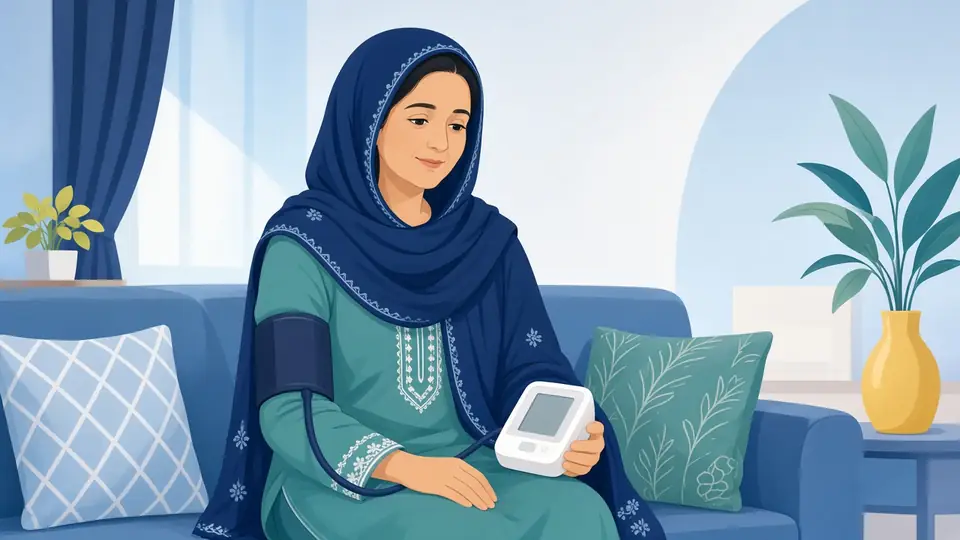
| High blood pressure | Check regularly; see BP normal range |
| Diabetes | Keep sugar and HbA1c on target |
| High cholesterol | Get a lipid profile; see cholesterol normal range |
| Excess weight, especially belly fat | Gradual weight loss |
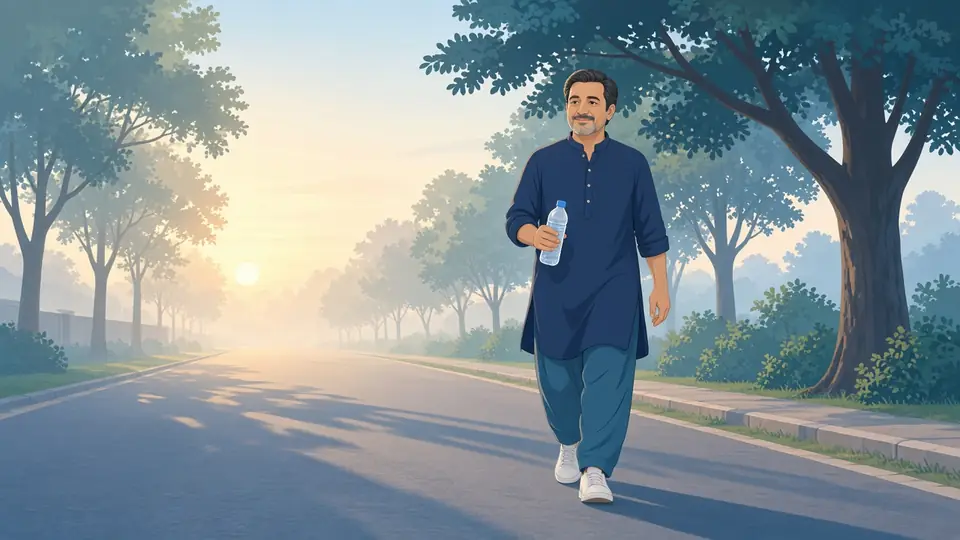
| Inactivity | At least 150 minutes a week of brisk walking |
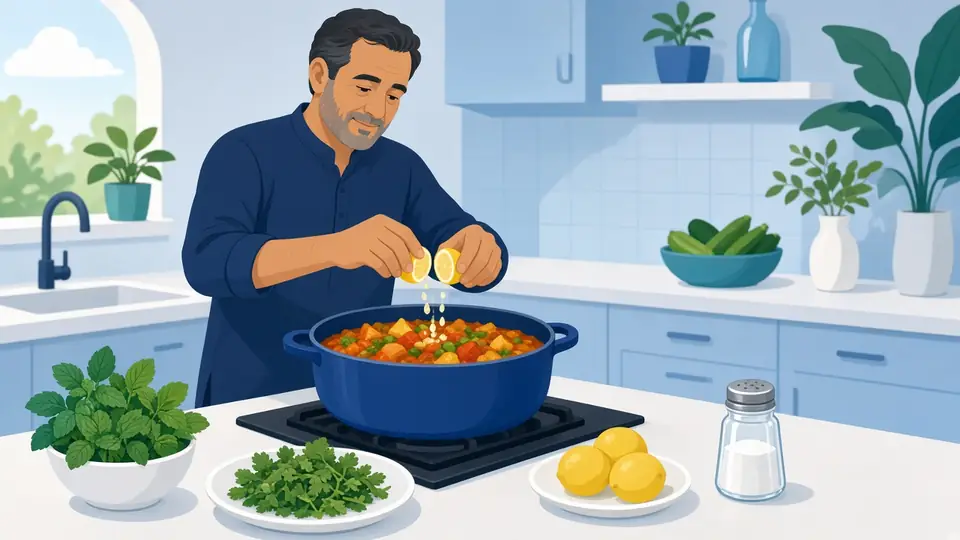
| Unhealthy diet | Less ghee, fried food, salt and sugar; more vegetables, daal and whole grains |
| Stress and poor sleep | Regular sleep, stress management |
Some risk factors can't be changed: age, male sex, South Asian ethnicity and family history. That makes the changeable ones even more important.
After a heart attack
Recovery usually involves medicines to protect the heart, cardiac rehabilitation (supervised exercise and education), lifestyle changes and regular follow-up. Take medicines exactly as prescribed and never stop them without advice. Many people return to work and normal life.
See a doctor promptly if
- Chest pain or discomfort lasting more than a few minutes, or coming and going: call 1122 or go to the nearest emergency department now.
- Chest discomfort that comes on with exertion and settles with rest (possible angina). See a doctor urgently, within days, not weeks.
- You have diabetes, high BP, high cholesterol, smoke, or have a family history of early heart disease and haven't had a heart check.
Frequently asked questions
What are the first signs of a heart attack?
Chest pain, pressure or tightness lasting more than a few minutes, often spreading to the arm, jaw or back, with breathlessness, sweating, nausea or light-headedness.
Can a heart attack happen without chest pain?
Yes. Some people, especially those with diabetes, older adults and women, have breathlessness, sudden tiredness, indigestion-like discomfort or feel faint, with little or no chest pain.
What should I do if someone is having a heart attack?
Call 1122 immediately, help them sit and rest, don't let them drive, and start CPR if they collapse and aren't breathing normally.
Can young men have heart attacks?
Yes. South Asian men can develop heart disease relatively young, especially with smoking, diabetes, high cholesterol, high BP or a family history.
How can I tell if chest pain is gas or a heart attack?
You can't reliably tell at home. If the pain is new, severe, lasts more than a few minutes, or comes with breathlessness, sweating or nausea, treat it as an emergency.
Sources
- NHS. Heart attack.
- MedlinePlus. Heart attack.
- National Heart, Lung, and Blood Institute (NIH). Heart attack: symptoms.
- World Health Organization. Cardiovascular diseases (CVDs) fact sheet.
- St John Ambulance. How to do CPR.
- NHS. Angina.
Sources were checked on 26 November 2026. Found an error? Tell us and we will correct it.
Medical disclaimer: This article is general information, not a diagnosis or treatment plan. Please talk to a qualified doctor about your own situation. Read our full disclaimer.
Sugar aur BP par weekly tips
One short email a week: desi diet, readings and small habits that help. Free, no spam.
We only use your email to send this newsletter and never share it. Unsubscribe anytime, every email has a one-click link. Privacy policy
Shukriya! You're subscribed. Pehli email jald aayegi.
Something went wrong. Please check your email address and try again.